
6 top tips how to manage stress
How to manage stress is very important for coping with daily issues. If you have too much to do in too little time, you are not alone! It’s OK to feel stressed from time to time but if it lasts too long it could lead to other problems, such as burnout, depression and illness.
When feeling stressed, we don’t take time to rest or say to ourselves, “It’s OK to do it later”. So, I would like to share more information about stress and some tips that can help you learn how to manage stress and take care of yourself.
In this article you will read about the stress bubble (tunnel vision), causes of stress, common stress symptoms, better stress management. At the end, you will get 6 tips on how to deal with stress.
The Stress Bubble (or tunnel vision)
When you are in a “stress bubble” you are blind to common sense. For example, you may think that you will have time to complete everything on your to-do list. For example; prepare for a meeting, write the monthly report, pick up your children from daycare, visit your mother in hospital, buy a present and do the weekly grocery shopping. Your “stress bubble” makes you not realize that it is impossible. Even though you notice that time is going “too fast”, you still believe that you will manage everything.
The stress bubble can also reduce our ability to think. Imagine that you are surrounded by a big ball of stress that prevents you from seeing the big picture. Instead, you only see what is immediately in front of you.
When you’re in your stress bubble, you think you are superman (or woman!), which means you’ll always be disappointed, angry, or annoyed with yourself. This has nothing to do with you. It is simply because your expectations of what can be achieved in a day are wrong. In that case, you need to change your expectations.
If we want to reduce the level of disappointment in our life, it is crucial that we learn to manage our expectations. You can fix busy days but if your expectations are unrealistic, as shown in the example above, you will feel overwhelmed and exhausted. There is too much of a difference between what you think you “must” do and what is “possible” to do within a day. If you continue like this, you will eventually be exposed to harmful stress.
“Whenever we fell stressed out, that’s a sign that our brain is pumping out stress hormones. If sustained over months and years, those hormones can ruin our health and make us a nervous wreck.”
Daniel Goleman
External and internal causes of stress
How to manage stress relies on being able to identify the causes of stress. External life changes like divorce, loss or losing your job are all well-known stressors. However, your own thoughts can also lead to stress. For example, if your expectations differ wildly from reality, particularly if your evaluation of a situation is negative instead of positive or you are thinking negatively about a future event.
Common stress symptoms
High stress levels can be identified by a wide range of symptoms; physical, cognitive and mental. These stress symptoms are our body’s way of telling us to relax and recover.
- Physical: headache, high pressure, palpitations, pain in neck and shoulders, stomach upset
- Cognitive: decreased concentration, difficulty reading books, poor memory, difficulty mutilating
- Mental: harder to feel happiness, feelings of hopelessness, sleep problems, mood swings, anxiety, depression, panic attacks
Source: Institute of Stress Medicine ISM
Better stress management
How a person experiences stress depends upon their interpretation of external events and the resulting internal thoughts. One person may feel extremely stressed about their current life, while another in similar situation does not feel any stress at all. Therefore, it is important for those who experience high stress levels to know how to manage stress better.
Depending on the level of stress experienced, these six tips can help you reduce stress levels. But if your situation is more complicated and has been going on for a long time it’s important that you talk to a specialist.

6 tips how to manage stress and become more productive!
Tip 1: Take regular breaks
It is not productive to do something hour upon hour without taking a break. Humans just aren’t meant to function this way. Research says that we should take a 10-minute break at least every 90 minutes. Taking a break means doing something different, for example, if you use your brain a lot, relax and just be in the here and now. Alternatively, if you are sitting down a lot, get up and walk around and stretch your body.
We also need energy to cope with our daily lives and that means eating regularly, as much as possible. If we don’t eat properly, we won’t be as productive as we could be. When you’re stressed it is easy to skip lunch but that will get your energy drop in the afternoon and would adversely affect your ability to perform. When you take enough breaks during days your brain will have a rest and that will help you to be more effective afterwards. The breaks will help you manage stress and even get more done!
Tip 2: Take deep breaths
When in stress mode, it’s difficult to be aware of our breathing. It will most likely be light and fast. Our brain needs oxygen and one way to achieve this is by taking deep breaths. Breathe deeply through your nose taking in as much air as possible until you feel your stomach get bigger. Hold your breath for a few seconds and then breathe out slowly through your mouth. Repeat 3-5 times to boost the energy in your brain and body. In addition, you will hopefully feel a little more relaxed.
Tip 3: Get enough sleep
One or two nights without enough sleep shouldn’t do much harm, but when you don’t prioritize your sleep it can lead to problems with your memory, attention, concentration, thinking and creativity. On average, adults need between 7-9 hours of sleep every night. If you are having serious problems sleeping, then you should talk to a doctor or other professionals.
Tip 4: Get moving
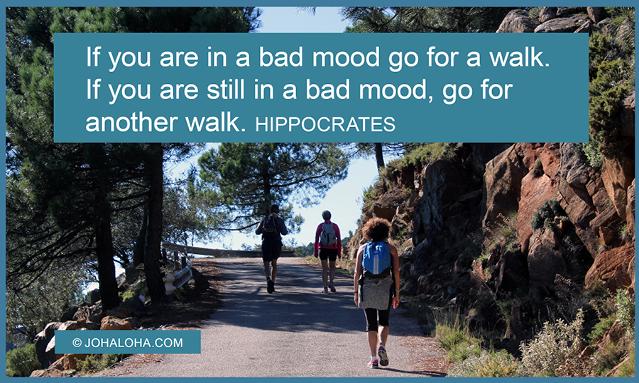
If you move around as much as you can during the day, you have more energy and this will make you more effective. Taking a brisk 15-minute walk several times a day will boost your energy and you will perform better afterwards. Don’t just limit yourself to walking, find other ways to move that you enjoy, like dancing, walking, cycling, running or riding. Try to find activities that you will enjoy doing on a regular basis, 2-3 times a week. This is relaxing your brain too and therefore a very good recipe for manage your stress
Tip 5: Relax and recover
If you have been busy and are you doing too much during the day, you should prioritize time for yourself, making time to relax. This means doing the things you enjoy and fill you with energy, whatever this means for you. It could be lying on the sofa with a good book, taking a nap (max 15 minutes), meeting a friend or playing with children, as long as the activity is calming and you enjoy it.
Tip 6: Prioritize, plan and say ‘no’
As we mentioned earlier, it is easy to get tunnel vision when you are stressed. Don’t worry, you can reduce stress by taking the time to prioritize, by establishing the most important task and then planning how and when to do it. To help your overloaded brain further, put the most important activities in your calendar so you can see at a glance when you want to do each task / project.
If you have a big project to plan, divide the tasks across several days and consider the best time of day for you to do it – this should be when you feel the most alert. When you plan tasks in your calendar you visualize what you need to achieve and you concentrate better when you have specific time for the actual task. Just as important…it will be easier for you to say ‘no’ to others who want your attention. Try to be in charge of your calendar as much as possible. That will help you manage stress better.
Do you want to know more about how we can help you develop?
See more here about our courses.