
Why does happiness seem so hard to achieve?
What is the meaning of life? There are numerous answers, but many believe the meaning of life is to be happy.
What exactly is happiness? Can everyone be happy? According to research, most people can become happy, but we cannot be happy all the time. Happiness is a feeling that needs to be nurtured to be experienced often. Imagine if you could learn to increase your feeling of happiness.
In this article, you will read about the obstacles that can prevent us from feeling happy, learn what happiness is, what the research shows, and how you can increase your feelings of happiness.

A bonus at the end of this article is waiting for you – for free!
Obstacles to achieving happiness
If happiness is the meaning of life; why does it sometimes seem so difficult to feel happy? If you don’t feel as happy as you would like, don’t worry, there are many people who feel the same way. Not feeling happy can be due to many factors. Sometimes, it can be a lack of knowledge about what happiness means. Here are some common misconceptions:
1 Happiness can only be bought or acquired
2 Don’t deserve to be happy
3 Fear of being happy
4 It is selfish to be happy
5 Everyone else seems so happy
1 Happiness can only be bought or acquired
 The belief that happiness costs money, and you are lucky to have the means to make a positive change to your life. Maybe you get another job, win the lottery, find someone to love, have children, buy the dream house, the red handbag, etc.
If we take the example of a winning lottery ticket; how happy would a person be if they win lots of money on the lottery? Many studies show the same thing; a person who was happy before the win will become happier for a while, but will then return to the same “happiness level” as before the win. Similarly, if the person was not happy before the win, they would become happy, but after a while would return to the same low level of happiness as before the lottery win. It does not matter how much money they have won.
You can buy, acquire, or make changes that will make you happier for a while. However, once you get used to the change, your happiness level drops to the level prior to the purchase or acquisition. After a while, you get used to the new house, more money or even a child. Your happiness level returns to your normal state.
The reason for the short-term level of happiness (despite the person getting something they want) is that there are additional factors that determine the feeling of happiness. Therefore, it is important to understand that happiness is within everyone, not something to acquire. Happiness and joy are part of our emotional register, which also includes sadness, anger and worry. The positive thing about emotions is that they can be influenced. More on that later.
2 Don’t deserve to be happy
Some people have a predominantly negative self-image and believe they are not worthy of happiness. However, it’s important to know that people can change their mindset, even though it will take time, effort and patience. But, with the right help, increased knowledge and training, the self-perception of not being worthy of happiness can change.
The longer the negative self-image has existed, the more time is required. If your feelings about not deserving happiness are deep rooted, or if you are depressed, you will need professional help.
3 Fear of being happy
 Those who are afraid to be happy may think it is difficult to achieve, or if you are happy, you may feel the fall will be deeper should something negative happen. Some people believe that if you are too happy, sooner or later something terrible will happen. In which case, it is safer not to be happy, rather than to expose yourself to the risk.
If you feel happiness, it does not mean someone else will be unhappy. Nor does it mean that if you are currently happy, something terrible will surely happen. Happiness cannot run out. It is not something dangerous or only happens to others.
Just like anything unfamiliar, the less you are used to feeling happiness, the greater the risk of being afraid of it. You are familiar with the emotions that you experience most often, so they make you feel safe, even if the emotions are negative. The problem with negative emotions is that they lead to negative thoughts. The more you think about negative things that have happened in your life or the risk they could happen, the less space is given to emotions such as happiness, joy and wellbeing.
Here, it is important to proceed carefully. For example, think of an activity or experience of something you like or is fun. Ask yourself: What did I do or experience yesterday that was good? Or, what would I like to do tomorrow that I enjoy? Ideally, find something that takes you a few minutes every day, so you can experience the feeling often. The more you get used to it, the more you discover the benefits, and the fear will gradually decrease.
4 It is selfish to be happy
Is a life based on seeking personal happiness inherently selfish? In fact, research has shown that unhappy people tend to be the most self-focused and often socially withdrawn, brooding and even antagonistic.
However, happy people are generally more sociable, flexible and creative, and can tolerate life’s daily frustrations more easily than unhappy people. Most importantly, they are more loving and forgiving than unhappy people.
Researchers have carried out some interesting experiments that show that happy people exhibit a certain quality of openness and willingness to reach out and help others. For example, in one experiment, they induced a happy mood, as the subjects unexpectedly found money on the street. A researcher then pretended to be a stranger who walked past) and “accidentally” dropped a stack of papers. The purpose was to see if the subject would stop to help the stranger. In another scenario, the subjects’ moods were lifted by listening to a comedy, after which someone approached them who wanted to borrow money.
The study found that the subjects who had first received a positive experience felt happier and were more likely to help someone or lend money than the second “control group” whose mood had not been boosted beforehand.
When you feel pleasure, you become less selfish and your kindness to others increases.
5 Everyone else seems so happy

Studies show that the more time we spend on the internet, particularly social media, the worse we feel about ourselves. What you mostly see on social media are people showing how much fun they are having, boasting about the fabulous restaurants they visit and amazing trips they take. The reason other people’s lives seem so exciting, happy and perfect is because people on social media have chosen to show only a small part of real life. It is easy to wear a smile for two seconds in front of the camera, but we have no idea how the person feels inside.
I don’t mean it is wrong to show happy people in different contexts. I just want to point out that no one is happy all the time. Therefore, it isn’t healthy to compare yourself to everyone else who seems to be doing so well. We all have ups and downs in our lives. The important thing is that we try to mix our emotions so that we have a good balance between negative and positive.
Our emotions control what we think about, so it is important to be aware of our thoughts. Are they usually worries, angry or happy thoughts? We think and feel what we are used to. If you think too many negative thoughts, it is possible to gradually increase the times you think more positive thoughts. Even better, do things that you enjoy, rather than just thinking about them. Find a balance between positive and negative thoughts and activities that are best for you.
If, for example, social media affects you negatively, you could reduce the amount of time you spend online or even stop looking at it for a while. There are expressions for this. Have you heard about FOMO and JOMO?
 From FOMO to JOMO
FOMO stands for fear of missing out – i.e. that many people spend so much time on social media that they don’t dare to stop because they are afraid of missing something. They have developed an addiction. A survey conducted by the Body Shop shows that many who spend more than 2 hours per day on social media have a lower self-love index.
JOMO stands for joy of missing out – i.e. that you have either gotten rid of FOMO or chosen to never get caught up in it. This positive feeling makes the person grateful that she has instead established good relationships with herself and others.
“JOMO is the satisfaction one feels in the current moment, with accompanying acceptance of what one doesn’t have in that moment,” says Sullivan-Windt Ph.D.
What is happiness?
However, it is important to note that social and cultural factors also influence how we think about happiness. For example, studies by William Tov and others have found that people from cultures that embrace more collectivist ideals think of happiness more in terms of harmony and satisfaction, while more individualistically minded people link it to feelings of abundance and joy. Social groups also shape happiness levels, such as families. Happier people increase the happiness of those around them.
Although people around the world have different ways of thinking about happiness, and maybe even experience it in different ways, most of them are feeling positive and about life in general.
In general, the happiness of Western traditions tends to be more individualistic and high-spirited, while the happiness of Eastern traditions is more communal and calmer.
Positive psychology
In research, the subject of happiness falls within the field of Positive Psychology. Positive psychology is dedicated to understanding how people work in terms of positivism, what makes us feel good, happy, and how to live meaningful lives. The focus is heavily on topics like character strengths, optimism, life satisfaction, happiness, well-being, gratitude, compassion (and self-compassion), self-esteem and self-confidence, hope and elevation.
The study of positive psychology is how we humans function at our best. But it is also the science of how we can build resilience and resources to deal with difficulties and prevent mental illness.
One definition of Positive Psychology:
“The study of what constitutes the pleasant life, the engaged life, and the meaningful life.” Seligman
Positive psychology is a subfield of psychology founded by Martin Seligman (President of the American Psychological Association 1998). He is known for the theory of ‘learned helplessness’ and the connection between the feeling of helplessness and depression. Seligman continued his research, focusing more on positive human experiences, states and traits, as well as wellbeing, happiness, strength and growth. He called this research “learned optimism”.
Positive psychology is not the same as positive thinking. Positive psychology believes that both positive and negative thoughts and feelings are required to flourish as a human being. Accepting and learning to deal with negative emotions, such as worry, sadness or anger, is an important strategy for well-being. The action of doing or experiencing positive things is one of the most important factors in bringing about change that leads to increased well-being. For example, the importance of learning to be grateful, to feel compassion, and to have good sleeping habits.
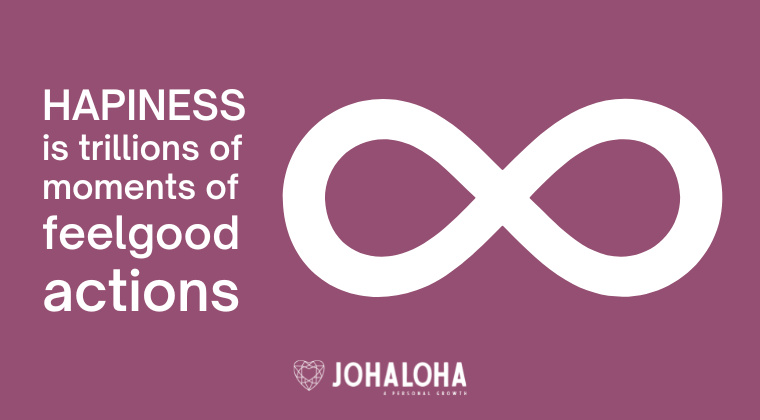
Happiness is actually trillions of moments of feelgood actions
To become better at feeling happy, we need to understand that feelings of happiness can arise for short moments. If we think we will find happiness somewhere else or with someone else and live happily ever after, we will not succeed. Happiness is inside you, among all your other emotions.
If it is difficult to feel moments of happiness, we need to learn to become aware of them, cherish and practice them as often as possible. The more aware we are of moments when we feel joy, the easier it will be to experience them and create them.
These moments of happiness will give us increased positive energy, which relieves feelings of a less positive nature. The more you get to know your lucky-charms, the easier you can create them. When you know more about what makes you sad, you can experience your moments of joy whenever you want.
Happiness is equal to all the trillions of micro-moments you feel, and will feel, when you do or experience something that you enjoy. These moments of happiness can last a minute, an hour, or a day. Time doesn’t matter, it’s how you experience the moment that makes you feel happiness. The question is: what can you do or experience to feel joy, well-being, and happiness? The answer is to accept all your feelings, but try to increase activities that put you in a feelgood mood.

Ideas to help you get started with moments of feelgood
To get started with your moments of feelgood. Start with what feels easiest to you. What do you have within reach? What can you do for a few minutes that you enjoy? Please don’t do things that lower your mood, such as social media. Do only things you believe will make you feel good. Here are some tips for you. If these don’t appeal to you, they help you figure out something else fun to do.
- Listen to your favourite music (maybe dance while you listen)
- Play a fun game (Sudoku, solitaire, Angry Birds) or watch funny videos on Youtube for 10 minutes
- Making your favourite coffee/tea/chocolate mix, and then drinking it without doing anything but enjoying the moment?
- Go for a walk for 15 minutes and listen to birds, wind, and other elements from nature
- Stand up and stretch your body for a couple of minutes, and take deep breaths
- Take notes of what you are grateful for in your life, and make it a habit
- Write a list of things you want to do or experience. Make it visible and add things as you come up with more

Brief summary
In this article, you have read about some obstacles that can prevent us from feeling happy. You have learned more about what happiness is and what positive psychology means. Also, you know that happiness consists of trillions of moments that you yourself can create to experience.
I hope you find the content useful. Reflect regularly on how you can increase your well-being and happiness with the help of many, many short and long feel-good moments.
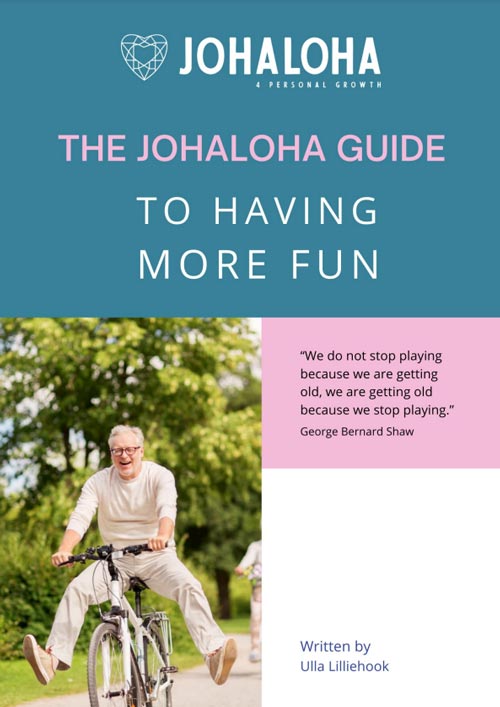
If you want to know more about wellness and having fun, we have a free guide you can download.
FREE BONUS!
Learn more about to relax and have fun!
The Johaloha Guide to Having More Fun
Sign up for our completely free Guide to Having More Fun.
Having fun gives us energy, so we can partly have fun while doing something we like, and partly get energy that makes it easier to do certain boring must-do things.
Click on the button below to get the guide!
Wish you all the best,
Ulla Lilliehook